Essential English Books for Information Management and Systems: Focusing on Network, Information Security, and Software Development

For students and professionals in Information Management and Information Systems (IMIS), mastering specialized English is crucial for accessing cutting-edge knowledge and collaborating in the global tech landscape. This field's core often intersects with Network & Information Security and Software Development. Below is a curated list of highly recommended English books tailored for IMIS learners, designed to build both technical vocabulary and conceptual understanding in these key areas.
Foundational and Integrated Reads
- "Management Information Systems: Managing the Digital Firm" by Kenneth C. Laudon and Jane P. Laudon
- Why it's recommended: This classic textbook provides a comprehensive overview of how information systems transform business processes and management. It uses clear, accessible English to explain core IMIS concepts, IT infrastructure, e-commerce, and decision support systems. It's an excellent starting point for building general professional vocabulary.
- "Introduction to Information Systems" by James O'Brien and George Marakas
- Why it's recommended: Another stellar foundation text, it effectively bridges business needs with technological solutions. The language is straightforward, with well-defined key terms, making it perfect for non-native speakers to grasp the interplay between management, data, networks, and software development.
Focus on Network & Information Security
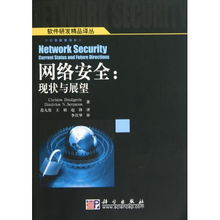
- "Network Security Essentials: Applications and Standards" by William Stallings
- Why it's recommended: William Stallings is renowned for his clear and authoritative technical writing. This book covers fundamental security principles, encryption, network security protocols (like SSL/TLS, IPsec), and system security in a structured manner. The precise definitions and explanations are invaluable for learning the precise English terminology of cybersecurity.
- "Computer Security: Principles and Practice" by William Stallings and Lawrie Brown
- Why it's recommended: A more expansive companion to the above, this book delves deeper into access control, malware, trusted systems, and legal/ethical issues. Its case studies and review questions help contextualize vocabulary, aiding in both comprehension and the ability to discuss security concepts fluently.
- "The Web Application Hacker's Handbook: Finding and Exploiting Security Flaws" by Dafydd Stuttard and Marcus Pinto
- Why it's recommended: For a practical, hands-on perspective, this book is a masterclass. It walks through the process of attacking and defending web applications, covering vulnerabilities like SQL injection and XSS. The action-oriented language and detailed methodology teach the active English used by security professionals in development and testing contexts.
Focus on Software Development
- "Clean Code: A Handbook of Agile Software Craftsmanship" by Robert C. Martin
- Why it's recommended: Beyond syntax, this book teaches the philosophy and best practices of writing readable, maintainable software. It's packed with concrete examples and principles (like meaningful naming, function design). The prose is engaging and opinionated, offering deep insights into the culture and communication standards of professional software development teams.
- "The Pragmatic Programmer: Your Journey to Mastery" by David Thomas and Andrew Hunt
- Why it's recommended: This book is a treasure trove of practical tips and metaphors for the developer's mindset. It covers topics from basic tools to architectural design. The English is conversational yet precise, making complex ideas relatable. It's essential for learning how to think and talk about development processes and problem-solving in English.
- "Design Patterns: Elements of Reusable Object-Oriented Software" by Erich Gamma, Richard Helm, Ralph Johnson, John Vlissides (The "Gang of Four")
- Why it's recommended: This is the canonical text for software design patterns. While advanced, its terminology (Factory, Observer, Singleton, etc.) is the universal language of software architects. Studying this book allows IMIS professionals to understand and participate in high-level design discussions documented in English.
Practical Application & Reference
- Official Documentation and RFCs (Request for Comments)
- Why it's recommended: There is no substitute for primary sources. Reading documentation for frameworks (e.g., Django, React), APIs, and especially RFCs for network protocols (e.g., RFC 791 for IP, RFC 2616 for HTTP/1.1) is the ultimate practice in technical English comprehension. RFCs, in particular, are models of precise, formal technical specification writing.
Learning Strategy:
Start with the foundational textbooks to build a broad vocabulary. Then, choose books based on your specialization interest—security or development. Read actively: maintain a glossary of new terms, summarize chapters in your own English words, and try to explain concepts aloud. Combining these books with following English-language tech blogs (e.g., Krebs on Security, Stack Overflow blogs) and videos will accelerate your proficiency, making you a more effective and globally competitive IMIS professional.
This collection provides a robust linguistic and conceptual toolkit, empowering you to navigate the interconnected worlds of information management, secure networks, and modern software creation.
如若轉(zhuǎn)載,請注明出處:http://m.guangchuang888.cn/product/47.html
更新時間:2026-01-08 12:04:02